


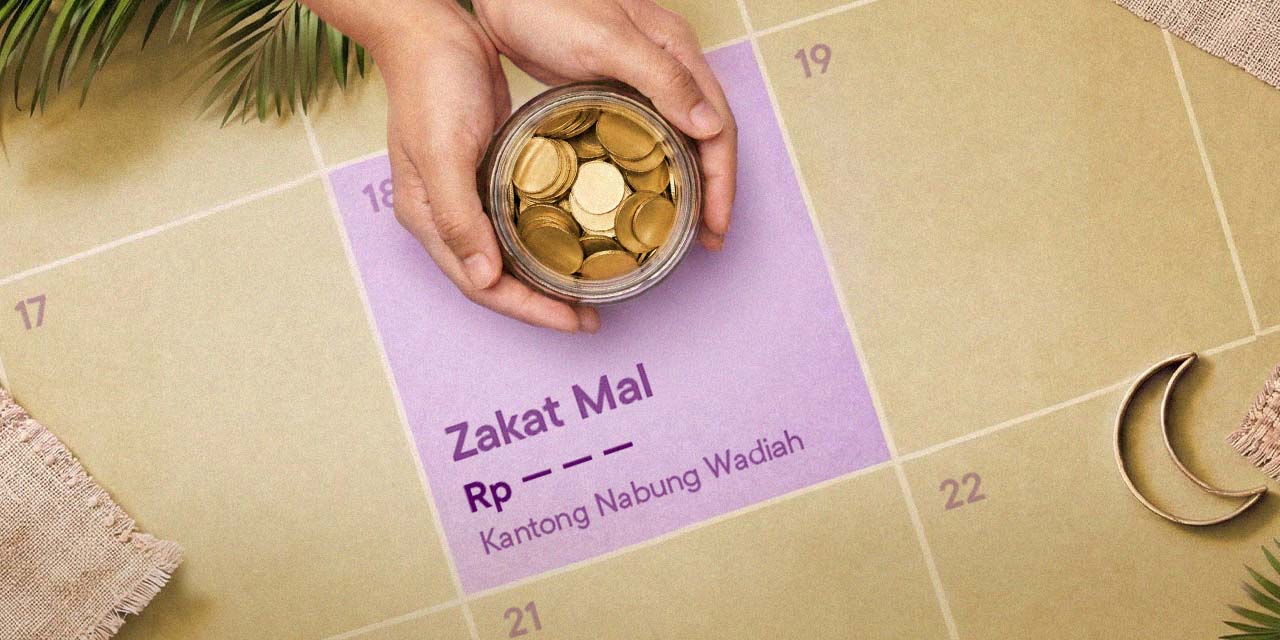

The annual Income Tax (PPh) reporting or SPT period is more than just an administrative routine. For a Muslim, it serves as the perfect financial "screening" moment. After filling in the details of your assets and debts for the tax report, you will have a clear picture of your net worth.
This is the most opportune time to fulfill your zakat mal (wealth zakat) to purify assets that have reached the nishab.
Also read: Self-tax Management for Freelancers
Why is Zakat Mal Important After Tax Reporting?
When filling out the SPT form, you record account balances, investments, gold, and receivables. This data provides an accurate foundation to determine if your wealth is subject to zakat.

A Guide to Calculating Zakat Mal
Zakat mal must be paid if your wealth has reached the Nishab (minimum threshold) and has been held for one lunar year (Haul).
1. How to determine the nishab for zakat mal
The nishab for zakat maal is equivalent to 85 grams of gold. If the current gold price is assumed to be Rp1,200,000/gram, then the minimum wealth threshold is:
85 x 1,200,000 = 102,000,000
2. Formula and calculation example (net worth of Rp300 million)
The rate for zakat maal is 2.5%.
Zakat to be paid = Total Net Worth x 2.5%
Case Simulation:
Suppose after totaling all bank balances, gold value, and stock portfolios in your SPT report (after deducting due debts), your total net worth is Rp300,000,000.
- Check Nishab: Since Rp300,000,000 > Rp102,000,000, you are obligated to pay zakat.
- Zakat Amount: Rp300,000,000 x 2.5% = Rp7,500,000
Thus, the zakat mal that must be paid is Rp7,500,000.

How to Manage Your Zakat Budget so it Doesn't Get Mixed Up
The amount of Rp7,500,000, or whatever your calculated zakat may be, is certainly not a small figure. If left sitting in a single main account, there is a risk the funds might accidentally be used for daily expenses or bills. This is why immediate budget separation is vital.
Why Use the Jago/Jago Syariah Pockets?
Bank Jago and Jago Syariah offer the Pocket feature, which is effective for digital fund allocation and separation.
- Visual Separation: Zakat funds won't be "swallowed" by your consumption balance.
- No Admin Fees: You can create many Pockets without worrying about monthly deductions, as long as the Pockets are active.
- Budgeting Discipline: Once the zakat figure is identified from your SPT, immediately "secure" the funds in a dedicated Pocket.
For Jago Syariah users, the Saving and Spending Pockets use Wadiah Yad Dhamanah akad (interest-free), in accordance with Sharia principles.

Pay Zakat Mal Practically with Jago Amal
Once the funds are ready in your pocket, you don't need to struggle searching for the account numbers of social institutions. The Jago application provides the Jago Amal feature.
Advantages of Jago Amal:
- Practical & Direct: Pay zakat directly from the application without switching platforms.
- Trusted Institutions: Partnered with official bodies like BAZNAS, Rumah Zakat, and Dompet Dhuafa.
- Transparent: You will receive valid proof of zakat payment and can see the clear distribution reports.
There is a Pocket for Every Good Intention
Managing finances wisely is a responsibility, but ensuring there is a blessing (barakah) within it brings peace of mind. With the Pocket feature in the Jago application, you are not only learning to manage worldly expenses but also staying disciplined in fulfilling your spiritual obligations.
In the Jago application, for every good intention, there’s a Pocket for that. Whether it’s for zakat, qurban, Umrah, or even daily morning sadaqah, you can prepare a dedicated space so that your noble plans are always realized and never mixed with other matters.
FAQ About Zakat Obligations
1. Is the tax I pay to the state included in zakat?
No. Tax is a citizen's obligation to the government, while zakat is a religious obligation. However, zakat paid through official institutions can serve as a tax deduction (PKP reduction) when you report your SPT next year.
2. What if my Rp300,000,000 wealth is in the form of gold or stocks?
It is still calculated at 2.5% of the current market value. You can use other cash funds equivalent to that zakat value to be paid through Jago Amal.
3. Are private homes and vehicles included in the Rp300,000,000 calculation?
No. Assets subject to zakat mal are those that are categorized as savings, investments or productive assets. Private residences and personal vehicles are not included in the calculation of wealth zakat.