

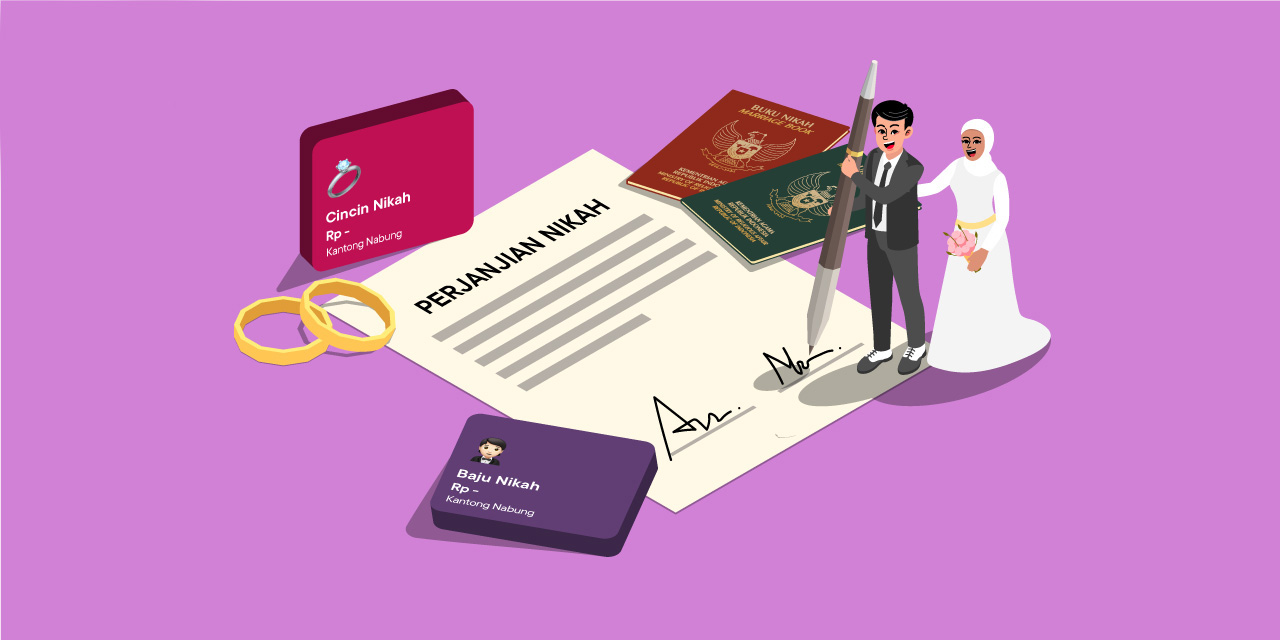

Nowadays, getting married based only on love is not enough. Every married couple certainly wants to build a harmonious family. In order for a marriage to last, always being in advance in communicating and managing family finances is key.
What to Do Before and After Marriage?
After marriage, two individuals begin to live a domestic life together. However, personal wants still exist. This is one of the things that frequently causes miscommunication between husbands and wives regarding finances after marriage.
Therefore, even before marriage, there are things that need to be done to keep the marriage lasting. In terms of financial management, every couple who is getting married can communicate and agree with each other. Which financial goals must be met first?
In-depth exploration of needs after marriage
Couples need to realize that needs after marriage will undergo a major shift from the single phase. First, there are fixed costs such as housing expenses (rent, mortgage, or neighborhood maintenance fees) and utility bills that are now shared. Second, household logistics including kitchen stock, groceries, and sanitation supplies will undoubtedly increase in volume.
Beyond that, social needs must also be anticipated, such as budgets for hosting guests, wedding contributions for relatives, and family transportation costs. Dissecting this list of needs in detail helps couples minimize the emotional friction that often arises from unexpected expenses during the first years of marriage.
"It would be good if each couple can sit down together to agree on the family's financial priorities, including considering children's education plans. Therefore, it is important to instill a simple lifestyle, a lifestyle that is not excessive or within our capabilities. This can be started by planning the use of money in an orderly manner and in accordance with sharia principles," said Ustadz Abdurrahman Zahier during Jago Syariah talkshow at the Halal Fair event in Yogyakarta in 2024.
Managing family finances according to Islamic teachings
According to Islamic law, managing finances well takes into account several factors. One of the most important things is for couples to get used to a simple lifestyle and avoid wasteful or consumptive behavior. Even after having children, it is worth continuing to live a simple life.
New strategies for managing finances after marriage
Managing finances after marriage is about more than just paying bills; it is about uniting two separate visions into one. It is essential to agree on the portion of funds allocated for 'household operational expenses' versus 'personal spending money' to maintain a sense of individual independence. Furthermore, joint debt management must be discussed transparently to ensure there are no hidden financial burdens that could unfairly weigh down one party.
It is also important to minimize debt and prepare emergency funds so you and your family can have peace of mind and don't have to borrow money from anyone when dealing with something unexpected. This is also the secret to ensuring a lasting marriage, as economic stability often serves as the foundation for emotional peace within a household.
Apart from that, in managing finances, couples can set financial goals in accordance with Islamic teachings (such as saving for Hajj first before saving for a holiday abroad or other goals that are more worldly in nature - reference: OJK). Don't forget to allocate part of your family income to help others in need in the form of zakat and sadaqah.
Always in Advance in Managing Finances According to Sharia to Enjoy a More Blissful Family Life
Managing and planning finances according to each person's ways and beliefs can make life more blissful. Muslim families, in this case, can manage their finances according to Islamic teachings by utilizing sharia financial products that are interest-free and use akad.
Tips for Family Financial Planning with Jago Syariah
Managing family finances according to sharia practically and easily can be started with Jago Syariah.
1. Budgeting according to sharia using the Jago Syariah Pockets
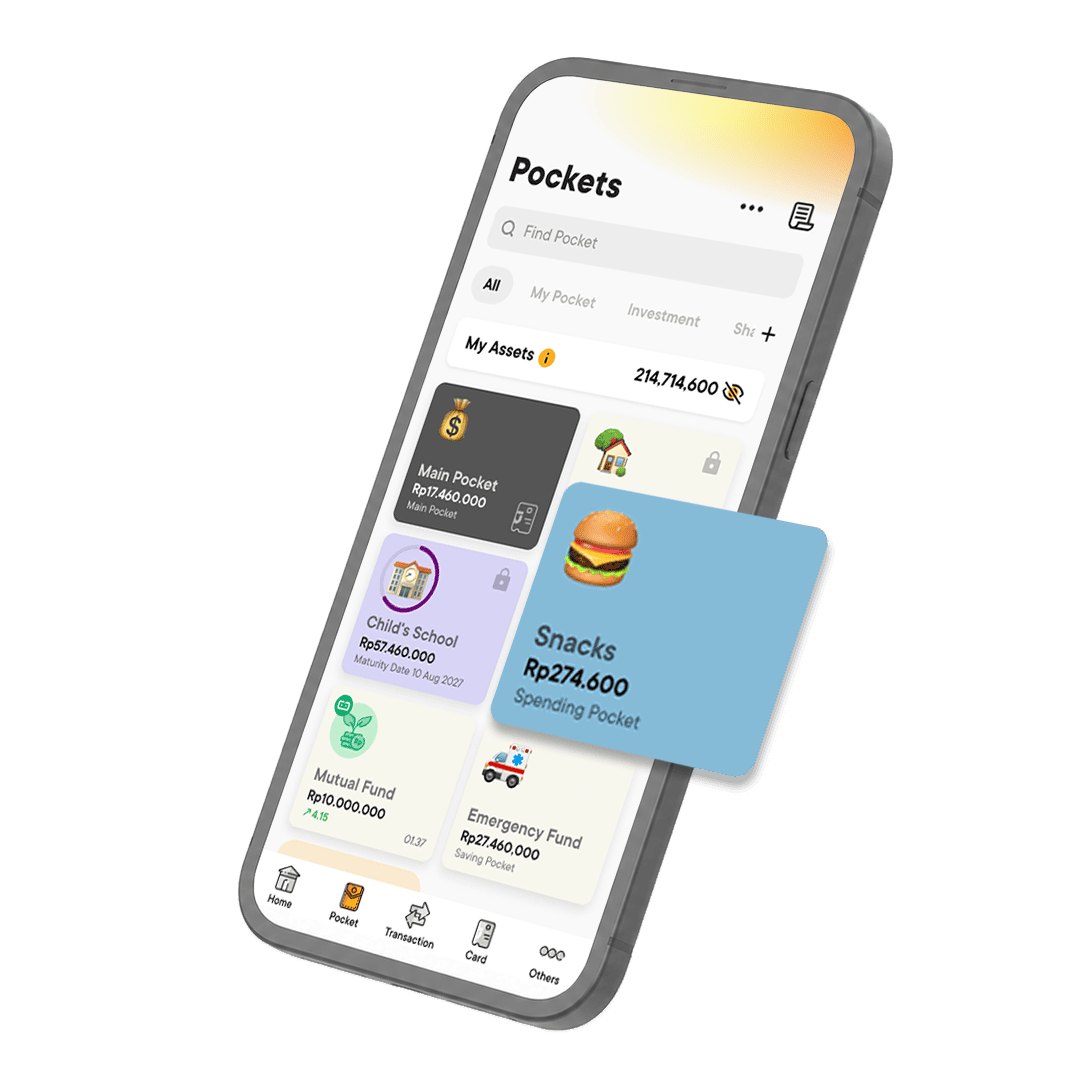
By using the Jago Syariah Pockets feature (you can create multiple Pockets), husband and wife can separate their financial needs into multiple accounts. Each Pocket created has a different account number.
So in a household, for example, you and your spouse want to build an emergency fund, prepare child's education savings and Umrah savings and allocate funds for monthly shopping and paying bills, For all these needs you can create a lot of Pockets to accommodate.
Next, allocate a budget for each Pocket. Budgeting can be done manually or automatically with the Auto-Budgeting feature.
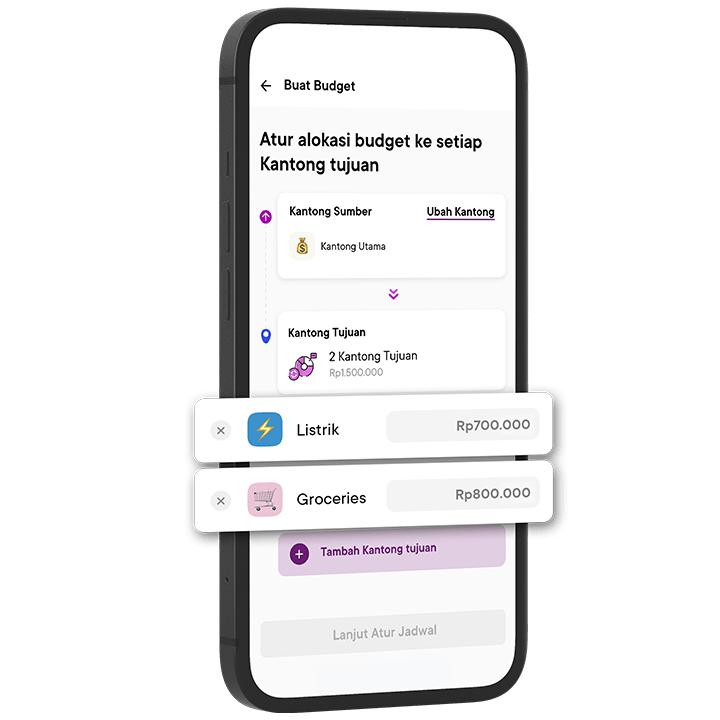
The Jago Syariah Pockets use Wadiah and Mudharabah akad. You can create the type of Pocket you need directly from the Jago application, including the Sharia Deposit Pocket.
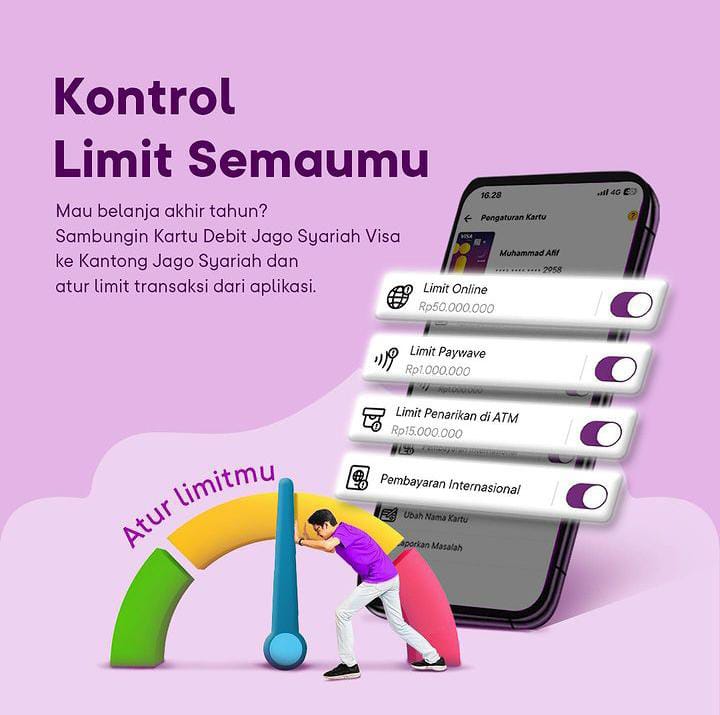
Especially for the Spending Pockets, this feature can be linked to a Jago Syariah debit card (Visa or GPN) for convenient non-cash transactions. Set your own daily transaction limits to ensure spending is within the budget and to prevent overspending.
2. Manage household finances together with your spouse by collaborating using the Jago Syariah Shared Pocket
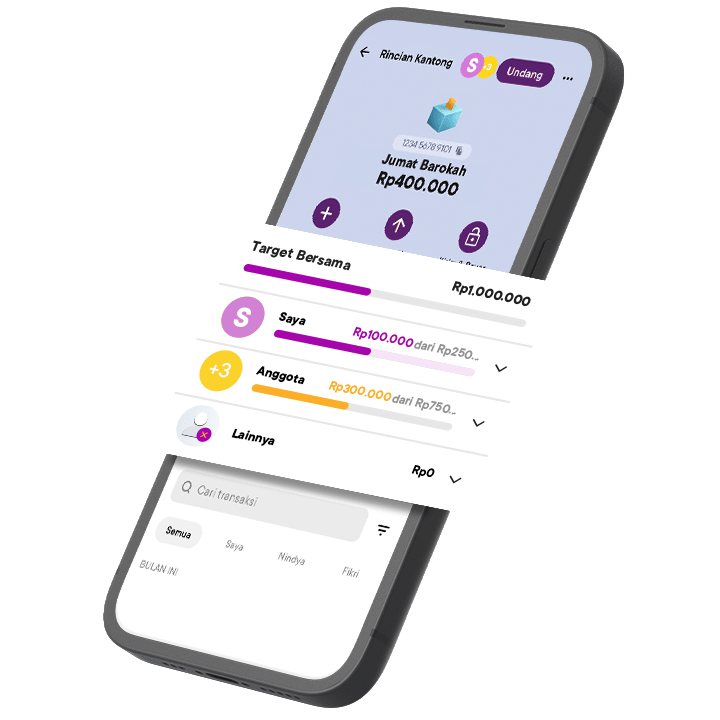
Managing family finances doesn't need to be done by the wife (who is usually appointed as the family treasurer) or the husband alone. Husband and wife can manage finances together using the Jago Syariah Shared Pocket.
Communicate and agree on the needs for which you want to manage funds together, for example child's education. Create a Shared Pocket, set a savings target and monitor the progress of your shared savings. It will make you be more enthusiastic about managing money and maintaining financial transparency with each other.
3. Many other Jago Syariah features make life easier
There must be regular household needs, such as paying electricity bills, monthly internet bills, house installments and insurance. For easy payment, use the Plan Ahead feature. Schedule recurring transactions so that payments are on time and you can still enjoy all subscribed service without worrying about late payment fines.
Monitoring monthly household expenses is also easier by using the Spend Analysis feature. All transactions via the Jago application are recorded automatically, saving you time because you don't need to do manual recording. This feature also makes it easier for you to carry out financial planning again (if necessary) after monitoring expenses regularly.
Ready to always be in advance in managing household finances according to sharia? Because marriage is part of prayer to unite two different individuals and in the process learn to build a sakinah family.