

Do you diligently invest using auto-debit every month, only to completely forget to check how your investments are doing afterward? Don't worry, you’re definitely not alone!
In the middle of our busy daily lives, automated investment features are true lifesavers. We get peace of mind knowing that we’re consistently setting money aside. But have you ever wondered: “Is the money being deducted every month actually working at its best?”
This is exactly why the popular "Set and Forget" strategy needs a quick reality check. It’s not entirely wrong, building a consistent habit is already a huge first step. However, there’s a crucial next step that often gets overlooked.
Let’s shift our mindset from simply Set and Forget to Set and Don’t Forget.
Smart Investing In This Economy: Why "Set and Don’t Forget"?
The Set feature (automation/auto-debit) is the engine, but Don’t Forget (periodic review) is the steering wheel. Without a steering wheel, your investments might be moving fast, but not necessarily in the right direction.
Here are a few fundamental reasons why you shouldn't just "forget" after investing:
- Changing Financial Goals: Your current life goals might be different from what they were two years ago. Shifting priorities require an adjusted investment strategy.
- Dynamic Market Conditions: The performance of investment instruments (like mutual funds or stocks) is always changing. An asset that used to be a top performer might be lagging today.
- Shifting Risk Profile: As you grow older, gain more financial knowledge, or experience changes in your financial situation, your risk tolerance can increase or decrease.
3 Hassle-Free Steps to Fully Review Your Portfolio
Evaluating your investments doesn't mean staring at price charts every second until your head hurts. What we need is mindful investing, i.e. managing your assets consciously, calmly, intentionally, and meaningfully.
Here are three practical, in-depth steps to review your investment portfolio:
1. Check your asset allocation (Rebalancing)
Over time, natural market movements will alter the original proportions of your investment portfolio. High-performing instruments will start to dominate your total assets, while others shrink. Rebalancing is the process of bringing that allocation back to an initial, safe composition that aligns with your risk profile.
- Why Is This Important? Left unmanaged, your portfolio could become significantly riskier than you realized.
- Example: Say your ideal initial allocation is 50% Money Market Mutual Funds (low risk) and 50% Equity Mutual Funds (high risk). After a strong year in the stock market, your equity assets surge, changing your portfolio mix to 30% Money Market and 70% Equity.
- Rebalancing Action: You can sell a portion of your equity mutual funds and transfer the funds to money market funds. Alternatively, you can direct your upcoming monthly auto-debits more toward money market funds until the ratio balances back to 50:50.
2. Evaluate performance: Look beyond red and green numbers
When you open your portfolio, try not to panic or get overexcited based purely on red (loss) or green (profit) figures. A short-term drop doesn't automatically mean your investment product is bad. The key is to evaluate performance relative to a benchmark and focus on long-term trends.
- Why Is This Important? Price dips caused by macroeconomic conditions (like global inflation or interest rate hikes) are normal. What’s dangerous is if your investment product continuously underperforms even while the general market is rallying.
- Example: Imagine you own Equity Mutual Fund X. Over the past year, the benchmark stock index grew by +8%, but Equity Mutual Fund X dropped by -5%.
- Evaluation Action: This underperformance signals an issue with the fund manager's strategy or the product’s underlying fundamentals. This is your cue to consider shifting your funds to another mutual fund product that consistently outperforms the benchmark.
3. Re-align with your timeline (Time horizon and financial goals)
Investments always come with a timeline. The closer you get to your target deadline, the less risk you can afford to take. You don't want money you need next month sitting in highly volatile assets.
- Why Is This Important? If the stock market suddenly crashes right when you need to withdraw cash for a home down payment or wedding expenses, you’ll be forced to lock in major losses.
- Example: You’re aiming to save Rp100 million for a home down payment in 3 years. Years 1 & 2: You keep your funds in Balanced or Equity Mutual Funds to target capital growth. Year 3 (6–12 months remaining): It’s time to mitigate risk. Gradually shift your assets (de-risking) from equity funds into Money Market Mutual Funds or stable, liquid instruments. That way, when payout day arrives, your funds are safe and shielded from market volatility.
A Practical, Hassle-Free Solution: Track All Your Assets on One Screen with Jago Investment Portfolio
One of the main reasons people forget or put off reviewing their portfolio is having too many applications. Checking mutual funds on App A, stocks on App B, and then manually recording everything on a spreadsheet is exhausting, right?
Fortunately, you can now apply the Set and Don’t Forget strategy much more practically using the Jago Investment Portfolio.
Through this feature in the Jago application, you can view your entire investment portfolio, from mutual funds to stocks, all from one unified dashboard. Even better, the Jago Investment Portfolio connects directly with KSEI (Kustodian Sentral Efek Indonesia).
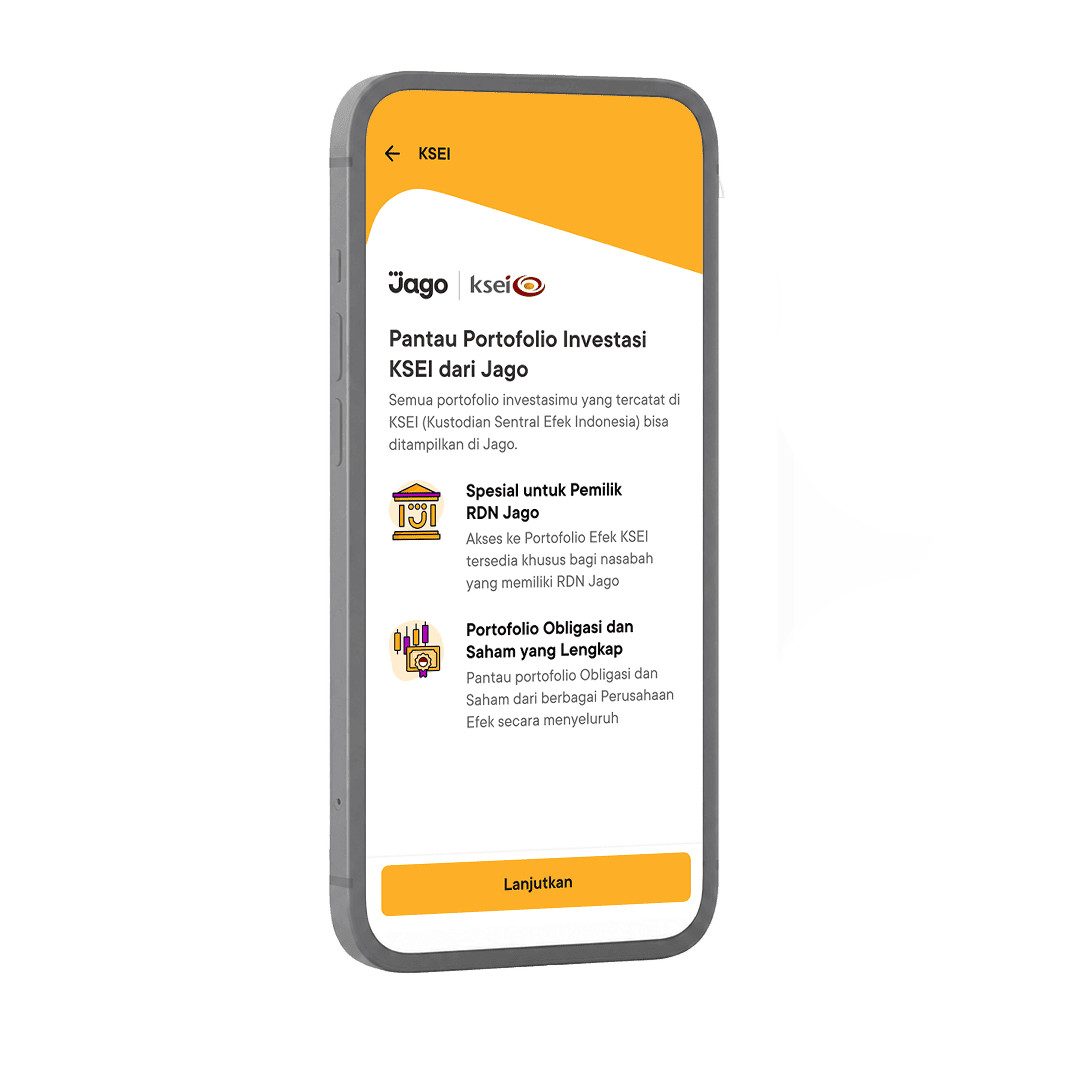
With the Jago Investment Portfolio, you can:
- Save Time: No need to log in and out of multiple investment platforms.
- Get the Big Picture: View your total accumulated wealth and real-time asset allocation at a glance.
- Make Smarter Decisions: Know exactly when to rebalance or mindfully add to your investments.
Next Steps to Make Your Money Truly Work for You
Respecting every rupiah you earn means giving your investments the care they deserve. Don't let your hard work of setting money aside every month go to waste simply because you forgot to check on it.
Starting today, set aside a dedicated moment, whether once a month or once a quarter, to sit back, open your Jago application, and check your Investment Portfolio. Make sure every bit of your money is moving you one step closer to your financial goals.
FAQ About Investment Portfolio and Strategy
1. How often should I ideally check my investment portfolio?
For medium- to long-term investments, doing a comprehensive portfolio review once a month or once every three months (quarterly) is plenty. Checking too frequently every day can trigger emotional decision-making driven by short-term market fluctuations.
2. Is the "Set and Don’t Forget" strategy suitable for beginner investors?
Absolutely! Beginners can still leverage the ease of automation (Set), while building the mindful habit (Don’t Forget) of taking ownership and staying aware of their wealth growth over time.