
Lebaran is always synonymous with victory and the joy of silaturahmi. Naturally, we want to provide the best for our families, from delicious feasts to thoughtful gifts for relatives. These good intentions are noble, but often, the sheer excitement of preparation leads us into the trap of impulsive shopping.
Without the right strategy, Lebaran euphoria can cause expenses to skyrocket unexpectedly. In reality, the essence of Lebaran is to find peace of mind, not a pile of bills the following month. To ensure your good intentions remain fulfilled without compromising financial stability, let’s look at these smart ways to manage your Lebaran shopping.
Why Is It Important to Avoid Impulsive Lebaran Shopping?
Impulsive shopping isn't just about the money spent; it’s about losing self-control. By avoiding unplanned, last-minute purchases, you can:
- Maintain Peace of Mind: No need to stress over a dwindling balance before the big day arrives.
- Allocate Funds Effectively: Direct your money toward more meaningful things, such as sadaqah or future savings.
- Appreciate the Process: Every item purchased will truly have a function and value for the family.
The Jago Ways for Couples to Avoid Impulsive Lebaran Shopping
1. Shift your shopping pattern: From monthly to weekly
This strategy applies not only to food but also to fashion and home decor. Buying everything at once in the final week of Ramadan will only leave you exhausted and trapped in high prices and crowded stores.
- Week 1 (Fashion & Prayer Essentials): Buy new clothes early. Size options are still complete, and you avoid the stress-inducing mall crowds.
- Week 2 (Home Decor & Hampers): Gradually buy items to beautify the home or fill gift parcels for relatives.
- Week 3 & 4 (Groceries & Food): Focus on dry goods first, then fresh ingredients in the final days.
The added bonus? Room for evaluation! By shopping weekly, you and your partner have time to evaluate your spending. If Week 1's clothing expenses exceed the plan, you have time in Week 2 to "hit the brakes" or adjust the budget in other areas (e.g., reducing home decorations). This weekly evaluation prevents "fine leaks" that are usually only felt at the end of the month.
2. Use the Shared Pocket feature for centralized budgeting

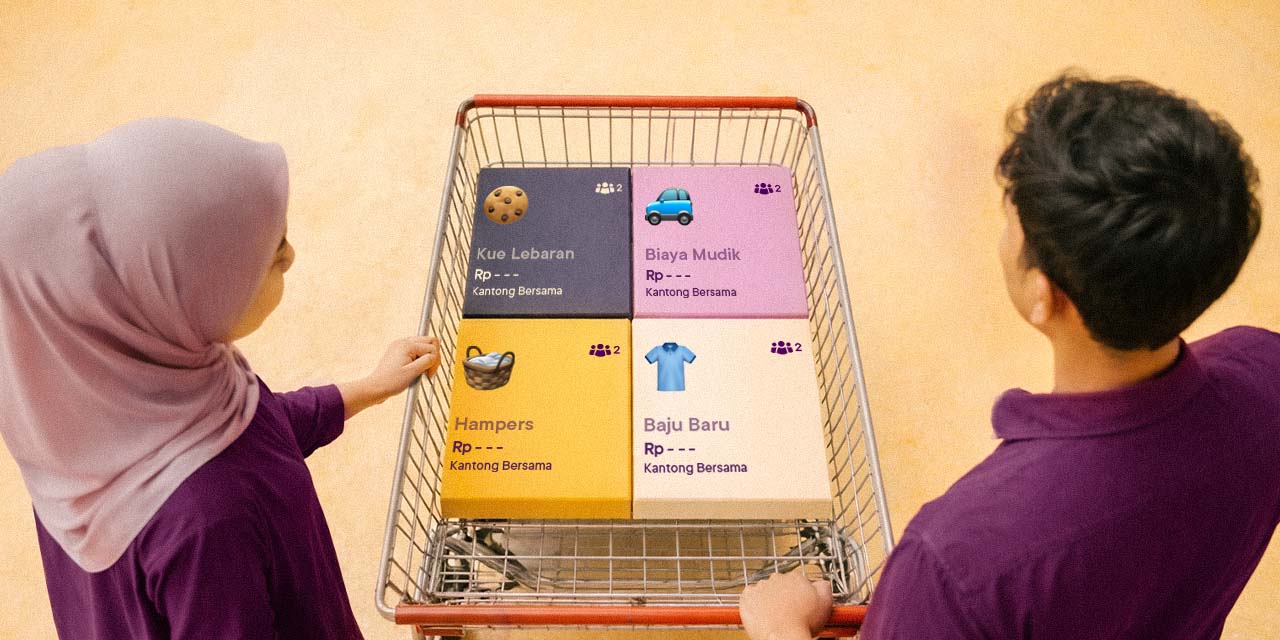
Communication between husband and wife is the key to tranquility. Use the Shared Pocket feature from Jago/Jago Syariah to consolidate your Lebaran funds.
- Real-Time Transparency: You and your partner can see the remaining balance in real-time. If the Lebaran Pocket starts running low, you’ll both automatically remind each other to stop spending.
- Set Shared Limits: You can agree on a maximum spending limit for each Shared Pocket so that no one shops impulsively without the other’s knowledge.
3. Control transactions with a Jago/Jago Syariah Visa Debit Card
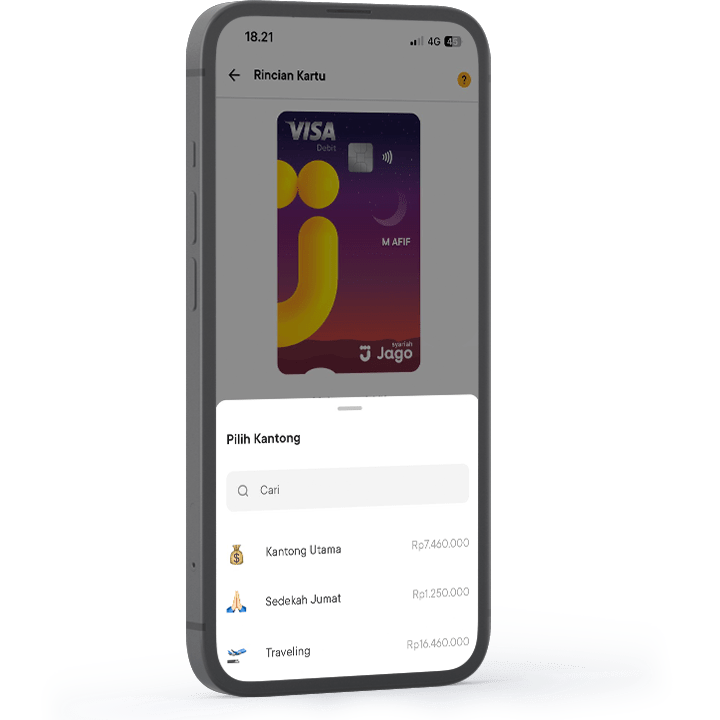
Link the Shared Pocket to a Jago/Jago Syariah Debit Card with the Visa logo. You can set daily transaction limits directly from the Jago application.
- Automatic Brake: If you set a spending limit of Rp1,000,000 on the card, any transaction exceeding that limit will be automatically declined. This is a powerful way to keep your good intentions on track without feeling guilty later.
Every Good Intention Can Have Its Own Pocket: Wise THR Allocation
To stay organized, divide your funds (especially your Holiday Allowance or THR) into several specific Pockets. Important: Do not spend your entire THR on Lebaran! Set aside a portion for savings or post-Lebaran emergency funds so your good intentions don't end with an empty wallet.
Here is a suggestion for your Pocket allocations:
- Zakat & Sadaqah Pocket (Top Priority): Secure funds for spiritual obligations first for total peace of heart.
- Food & Feast Pocket: For baking ingredients, signature Lebaran dishes, and basic necessities.
- Lebaran Fashion & Worship Pocket: Allocate a fixed budget so you aren't tempted by massive mall discounts.
- Hampers/Gifts Pocket: Specifically for the good intention of sharing with parents, in-laws, and relatives.
- Mudik & Transport Pocket: For fuel, tolls, or tickets to ensure a smooth journey for silaturahmi.
- Lebaran "Angpao" Pocket: Pocket money for nephews, nieces, and relatives. Keep this separate from the kitchen budget.
- Emergency Buffer Pocket (5-10%): For unexpected needs that often pop up on the day of the celebration.
FAQ About Wise Lebaran Shopping
1. What percentage of THR should ideally be used for Lebaran?
It is recommended to use a maximum of 50-70% of your THR for Lebaran. The remaining 30-50% should be moved immediately to a Savings or Investment Pocket to secure your future.
2. How do husband and wife split shopping duties using the Shared Pockets?
One partner can focus on monitoring the Food Pocket, while the other tracks the Transport/Mudik Pocket. Since the balance is visible to both, you can remind each other if a category is reaching its limit.
3. Can the Jago/Jago Syariah Visa Debit Card be used for marketplace shopping?
Yes. You can link your Jago/Jago Syariah debit card to various online shopping platforms and still set transaction limits to stay in control.
4. What if I find a "must-have" item that isn't on the Pocket list?
Use the "24-hour rule." If after one day you feel the item isn't essential, it was likely just an impulsive urge. Save that money for another good intention.
There is a Pocket for Every Good Intention
The key to a beautiful Lebaran is peace of mind. By organizing every good intention into the right Pockets, you and your partner can celebrate victory with a peaceful heart.