



In life, problems sometimes come your way. There is no person in their life who has never experienced problems. How we face and successfully overcome these problems will have an impact on mental health. Therefore, efforts to maintain mental health are as important as efforts to maintain physical health.
If physical health can be maintained by exercising regularly and managing your diet properly, what about mental health? This article discusses mental health from Islamic perspective and various ways that can be done to maintain mental health, especially those related to financial planning and management.
Mental Health in Islamic Perspective
Islam emphasizes the importance of maintaining mental health. Life becomes more peaceful without stressful thoughts and excessive burdens.
How to maintain mental health from Islamic perspective
Dhikr to Allah SWT and doing good deeds to others can help boost mental health because they keep you away from sadness and fear. Also, always be guided by the teachings of the Islamic religion in carrying out anything so that peace of mind can be achieved and mental health can be maintained. Another positive influence is that good relationships with the Creator and each other can be even better (reference: Republika).
How to Manage and Save Money According to Islam to Achieve the Blessings of Life and Maintain Mental Health
As seen on the Financial Services Authority (OJK) website, Muslims can obey and apply the teachings of the Islamic religion in their daily lives, including in matters of managing finances. By obeying religious teachings, life will become more blessed and peaceful, thus encouraging the maintaining of mental health.
Ways that can be done include saving to achieve financial goals that are prioritized in the Islamic religion, such as performing the Umrah and Hajj pilgrimages and living a simple life without wasting or squandering the money or wealth you have.
Apart from that, you can also reduce or avoid debt, then also allocate a portion of your income to donate or give to charity.
It is also important to manage finances using products that are based on sharia akads because conventional banking products are different from sharia banking products. For example, conventional banking products offer interest, while interest is something that is contrary to Islamic teachings.
As explained on the OJK website, the main guidelines for financial management based on sharia principles adhere to the Al-Qur'an and Islamic hadith. Apart from prohibiting the practice of giving interest, sharia banking transactions also prohibit all forms of activities that provide profits without having to work hard (maisir) and are unclear in nature, including all forms of gambling (gharar).
Jago Syariah: Digital Bank that Offers Financial Products with Sharia Compliance and Free Monthly Admin Fees
Managing finances guided by sharia principles becomes easier and more practical with Jago Syariah. Through the Jago application, you can save, shop with debit cards and QRIS, complete bill payments and carry out various other transactions because of its complete features.
1. Save money in wadiah and mudharabah savings
Minimizing debt and living a simple lifestyle can be done by allocating a portion of your income to savings. Jago Syariah as a digital bank in Indonesia offers savings with wadiah and mudharabah akads that you can choose according to your needs.
For savings with short-term financial goals such as going on holiday with your family and giving graduation gifts to your children, for example, you can save money in the Saving Pocket that uses the interest-free Wadiah Yad Dhamanah akad.
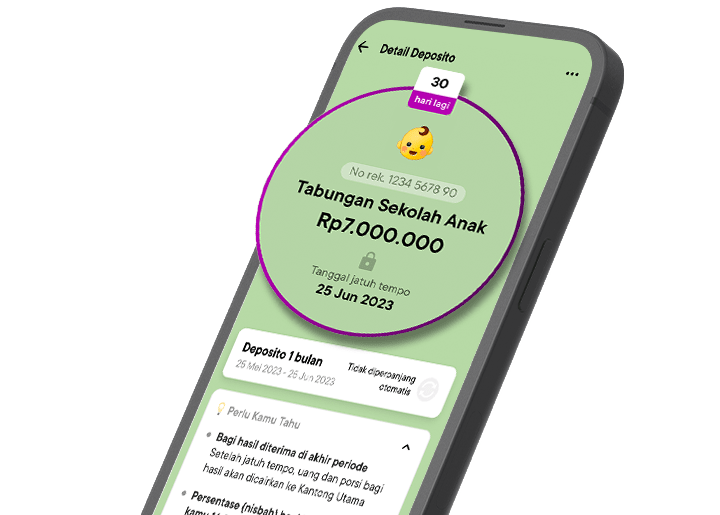
Meanwhile, to realize long-term financial goals such as performing Umrah with your family, sending your parents on the Hajj and saving funds for your children's education, you can save money in the Sharia Deposit. The Sharia Deposit of Jago Syariah uses Mudharabah Muthlaqah akad with a competitive profit sharing ratio.
You can have more than 1 Saving Pocket and more than 1 Sharia Deposit. Each savings account also has a different account number.
2. Manage expenses and budget regularly using the Spending Pocket with Wadiah akad
Another way to live debt-free to maintain mental health is to manage expenses well. One way is with budgeting discipline.
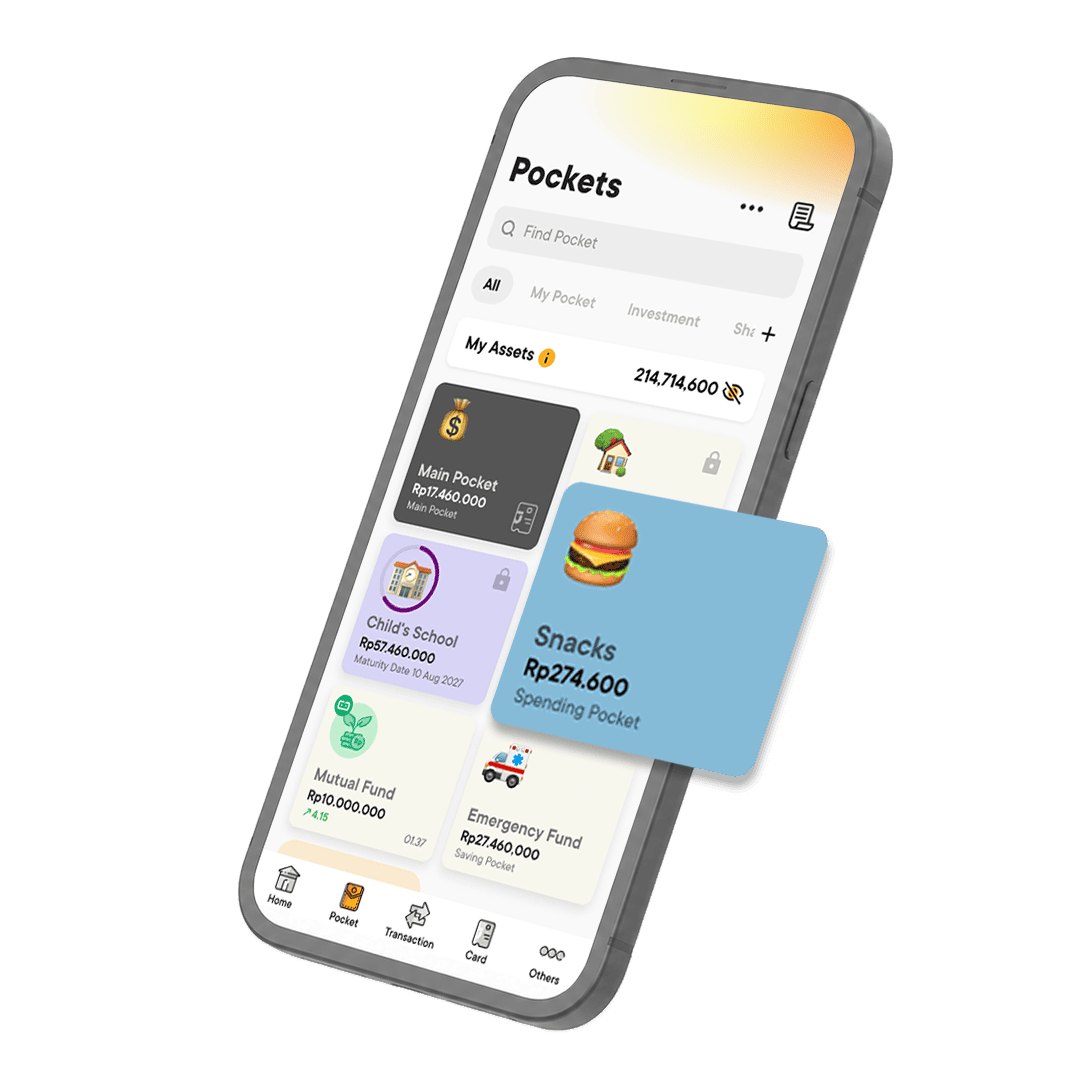
Not only wadiah and mudharabah savings, you can also open multiple accounts to manage expenses using the Spending Pocket in the jago application. Prioritize needs over wants and allocate funds appropriately.
Funds to pay monthly electricity, internet and water bills can be allocated into its own Spending Pocket. Likewise, funds for monthly necessities, food, transportation, salary for household assistants, and many more. By allocating funds for each need appropriately, you ensure that your expenses are not greater than your income.
3. Share kindness by paying zakat and giving sadaqah regularly using the Jago Amal feature
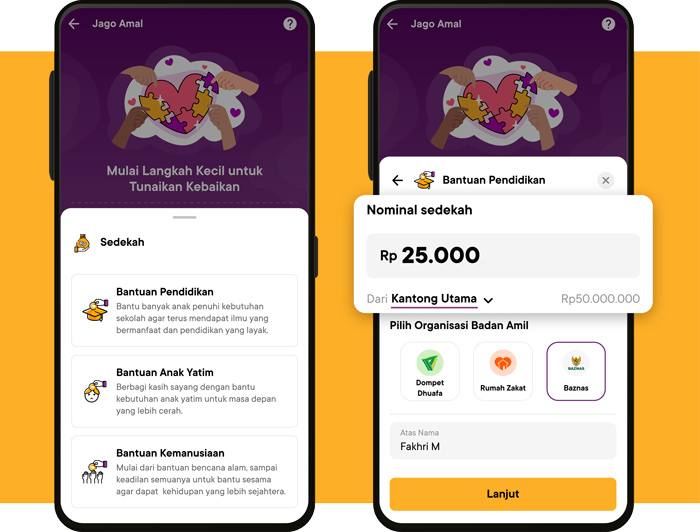
Purify your soul while sharing kindness is best if done regularly and according to amanah. With Jago Syariah, you can more easily give zakat and sadaqah from wherever and whenever you want through the Jago Amal feature. Your donation will be distributed to those in need through trusted amil organizations that have collaborated with Jago Syariah, namely Baznas, Rumah Zakat and Dompet Dhuafa.
4. Have multiple sharia bank accounts with no monthly admin fees
So, how many Pockets will you create in the Jago application? No matter how many Pockets you have, you don't need to pay any monthly admin fees at all. Not only are your expenses more organized, but you also save money at the same time. And, there are various other ways of saving money that you can enjoy by having a Jago Syariah account, according to your Account Level each month.
Managing finances with Jago Syariah makes life more blessed and trustworthy. InsyaAllah, mental health can also be well maintained so that you can live your daily life with peace of mind and free from anxiety. Not only because you apply sharia principles in managing your finances, but also because you make sure you have savings and don't spend money irresponsibly through budgeting.