



Managing expenses is the core foundation of healthy personal financial management. Many people struggle because they feel their spending is overwhelming and disorganized. However, did you know that all those personal expense types can actually be grouped into just three expense categories?
By understanding these groupings, it will be much easier for you to determine which expense posts should be prioritized and which ones can be reduced.
3 Essential Personal Expense Categories or Posts You Must Know
1. Fixed expenses
This expense category is the easiest to predict because the amount and payment intervals remain constant every month.
-
Examples: Internet subscriptions, cable TV, insurance premiums, or fixed loan installments.
-
Includes Savings: To make saving a habit, you should include retirement savings and emergency funds in the fixed category. Think of it as a "bill" you pay to your future self.
-
Budgeting: Very simple—you just follow the same nominal amount from the previous month.
2. Recurring expenses
This is similar to fixed expenses, but the frequency is less common (e.g., every 3 months or once a year) and the amount can vary.
-
Examples: Birthday gifts for friends, annual vehicle taxes, or major vehicle servicing fees.
-
Budgeting: To avoid "sticker shock" when the due date arrives, it is best to set aside a small amount of money each month to fill this expense post.
3. Dynamic expenses
This expense category fluctuates the most because it depends heavily on your lifestyle and daily activities.
-
Examples: Electricity bills, groceries, fuel/gasoline, and entertainment (self-reward).
-
Budgeting: Although volatile, this is the easiest category to control. If your monthly expenses start to swell, these are the first posts you should "diet" or cut back on.
Innovative Solution: Simulating Daily, Monthly, Recurring, and Dynamic Expense Management with the Jago Pockets—Because There’s a Pocket for Everything
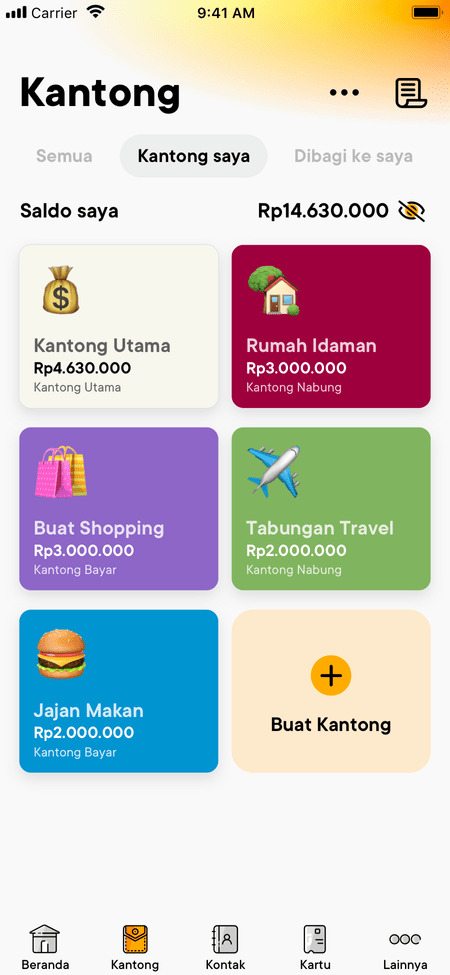
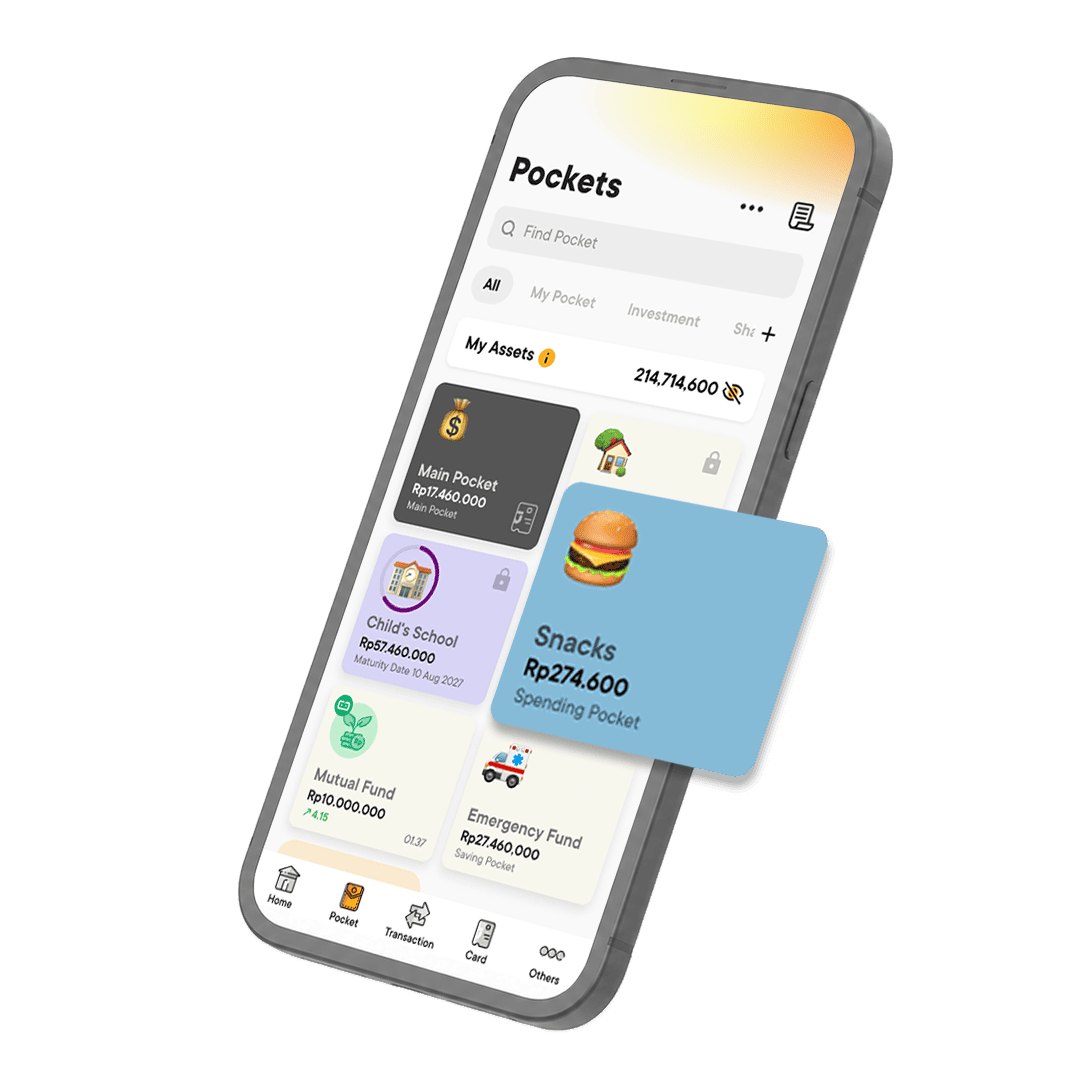
To ensure the theory above doesn’t just remain as a note, the Jago app provides the Pockets feature, which functions as separate accounts for every financial goal. You can create dozens of different Pockets (multiple accounts, as one Pocket equals one account number) so your money never gets mixed up.
Financial management simulation using the Jago Pockets
| Pocket Name | Category | Function / Simulation |
| Wi-Fi Bill Pocket | Fixed Expense | Deposit the exact amount of your bill (e.g., Rp450,000). Use the Plan Ahead feature so Jago automatically pays it on the 1st of every month. |
| Emergency Fund Pocket | Fixed Expense | Use the Auto-Budgeting feature to move Rp500,000 every payday. This becomes your "mandatory savings." |
| Gifts & Events Pocket | Recurring Expense | Set aside Rp100,000/month. When your best friend’s birthday arrives in the 5th month, you’ll have a balance of Rp500,000 ready to use without touching your food budget. |
| Grocery Pocket | Dynamic Expense | Deposit your monthly budget (e.g., Rp2,000,000). Whenever you shop at the supermarket, link your Jago Debit Card to this Pocket to ensure other balances remain untouched. |
| Coffee/Snack Pocket | Dynamic Expense | This is your control pocket. If the balance hits Rp0, it means your snack quota for the month is used up—time to wait for next month! |
Why is managing expenses with Jago so easy and practical?
-
Real Visualization: You can see exactly how much money is left in every expense post within each Pocket without needing to calculate anything manually.
-
Automation (Plan Ahead Feature): No more late fees from forgotten bills. Jago will execute your routine payments automatically.
-
Instant Analysis: Jago automatically categorizes your transaction history. At the end of the month, you can view a report to see if your monthly expenses were mostly spent on coffee or on essential needs.
What are you waiting for? Start organizing your personal expense categories now and feel how easy it is to manage your finances down to the smallest detail!