


Some of you may not be too familiar with the term ziswaf. In general, terms that are more familiar to Muslims are zakat and sadaqah. Ziswaf stands for zakat, infaq, sadaqah and waqf. The four of them uphold social values and have a goal that is not much different, namely to remove the partition between rich and poor.
What is Ziswaf?
As mentioned above, ziswaf is short for zakat, infaq, sadaqah and waqf. And here's a description for each.
1. Zakat
Zakat is one of the pillars of Islam and every Muslim who fulfills the requirements has the obligation to pay zakat. According to the MUI Fatwa, zakat must be paid by those who have a fixed or non-fixed income. The total income in a year has reached the nishab of income zakat, which is equal to 85 grams of gold per year.
The amount of zakat that needs to be paid is 2.5% of total income per month. However, if the amount of income in a month is not fixed, the calculation of income zakat can also be done annually, amounting to 2.5% of total income per year.
2. Infaq
Infaq has the meaning of giving wealth for various kinds of kindness as ordered by Islamic teachings. Infaq is also a form of social charity. Infaq is different from zakat in terms of nishab and haul. In addition, infaq is also not obligatory for every Muslim. And, you can do it any time you want. An example of infaq that is commonly done is helping finance the construction of a mosque.
3. Sadaqah
In Islamic teachings, sadaqah has the meaning of giving something to others voluntarily and sincerely. Giving is not limited in material form. You can also give sadaqah in the form of well-intentioned energy and advice, for example. Sadaqah can be done whenever you want, without limitation of time and amount.
4. Waqf
What about waqf? Waqf is also a form of charity by retaining property and channeling its benefits according to the way of Allah SWT. In other words, the property is retained in terms of ownership but can be utilized for the benefit of many or common good. A common example of waqf is the building of a mosque or foundation on the donated land.
Ziswaf is Easy and Practical with Jago and Jago Syariah
Based on the definition of ziswaf above, zakat, infaq and sadaqah are easier to do in everyday life for most people. There are several ways you can carry out your obligations and share kindness with others in need. Ziswaf can be practical and easy as it can be done directly from the Jago application.
1. Jago Amal
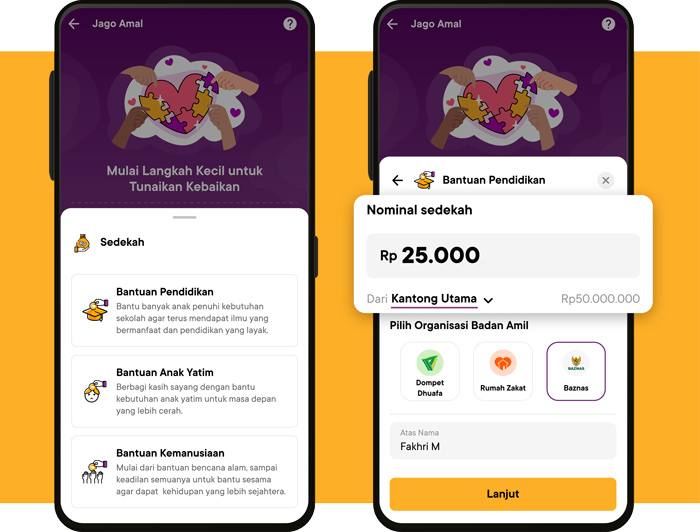
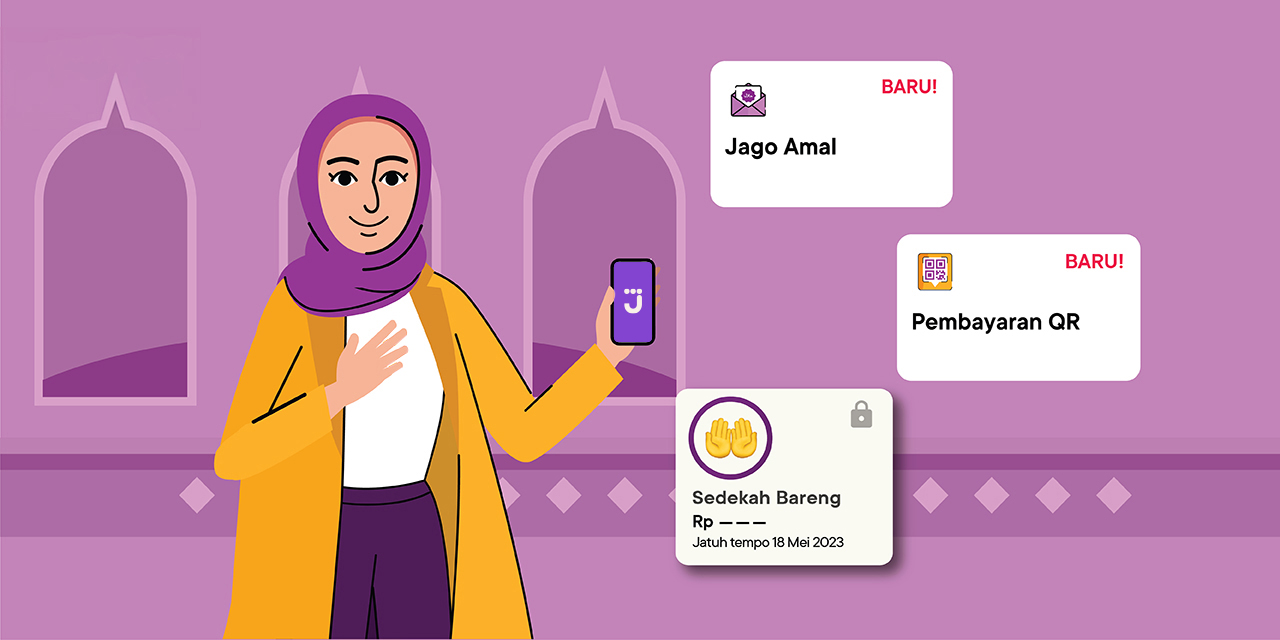
With Jago Amal, you don't need to leave your house to fulfill zakat obligations or sadaqah. After doing zakat or giving sadaqah, you can get transparent information about the distribution. Jago Amal also works with various selected and trusted Amil Agency organizations and uses the Wakalah akad.
Besides being able to pay zakat or sadaqah whenever and wherever you are, you can also be an extension of the closest person who wants to entrust zakat or sadaqah to you.
For sadaqah, you can choose from several categories available, namely education support, humanitarian aid and orphans in need.
You can read more information about Jago Amal here.
2. QRIS Jago
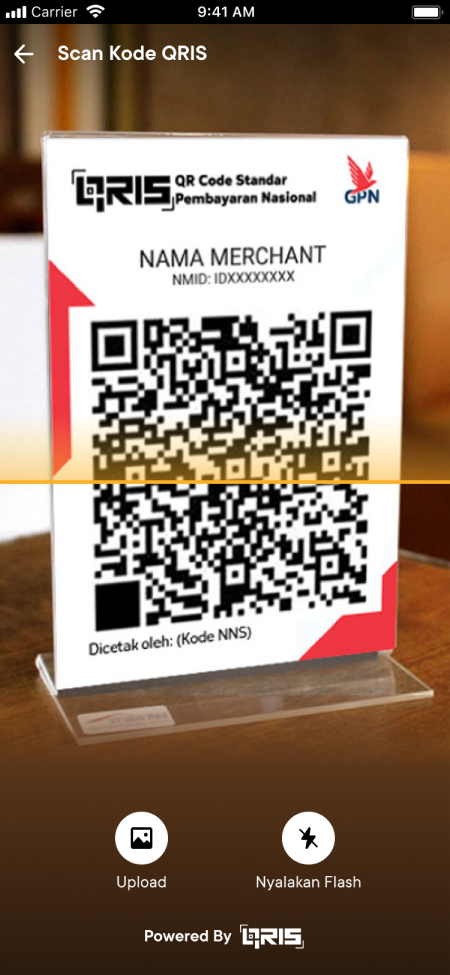
You can also do charity work to help ease the burden on anyone who needs it through QRIS Jago, especially when you are outside.
On your way to the supermarket, you pass a mosque or charity seeking donations. And, it just so happens that the mosque or social foundation has a QRIS code that you can scan. Also what a coincidence, you don't have a lot of cash with you. Log in to your Jago app to complete payment.
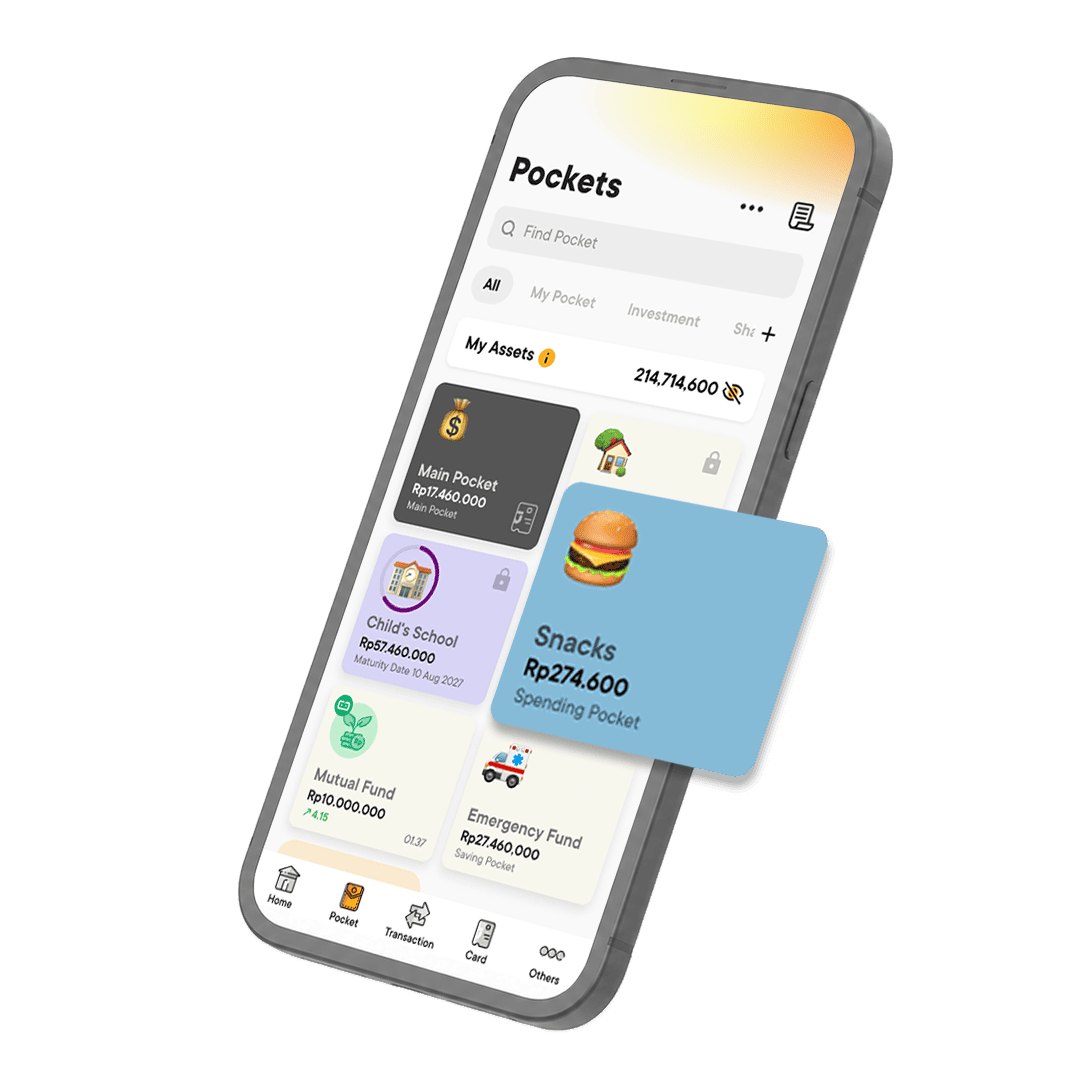
So that funds for zakat or sadaqah don't mix with funds for other needs, you can create a separate Spending Pocket. Then, move the allocated money. When you are going to give ziswaf through QRIS Jago, make sure you choose that Spending Pocket as the source of funds.
3. Shared Pocket
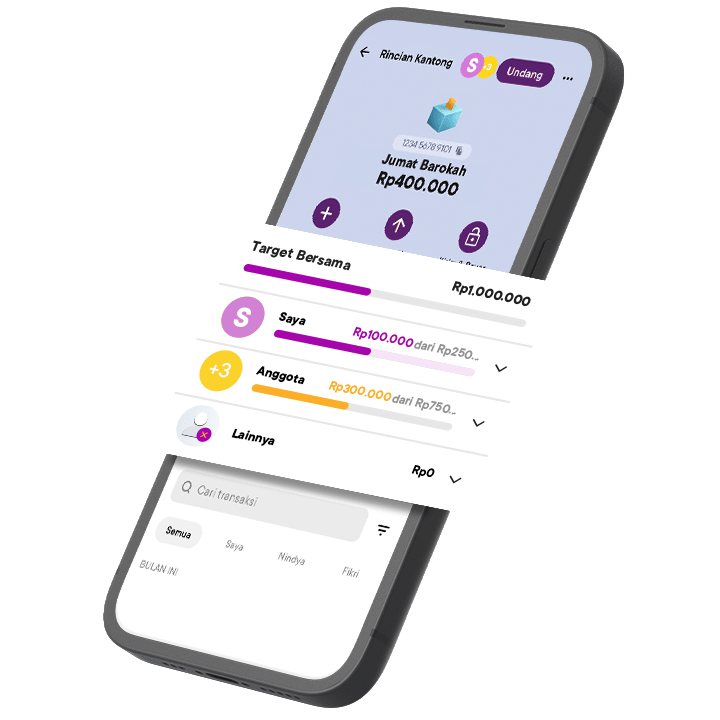
It's wonderful when you can pay zakat or sadaqah together with family or friends.
The Shared Pocket feature makes it possible to collaborate financially with those closest to you. Including collecting zakat or sadaqah, you can use the Shared Pocket.
You can also define the role of each member of the Shared Pocket. If it's easier if only one person manages and distributes the money that has been collected, then you can make that person the spender, while the other members are just viewers.
Even though they are only a viewer, each member can access the transaction history of the Shared Pocket. Thus, transparency is maintained.
The Shared Pocket also has its own account number. So, you don't need to share your Main Pocket number if you are the one responsible for managing the money. Each member only needs to move money to the Shared Pocket.
Let's help ease the burden on those in need through ziswaf with Jago and Jago Syariah.