



Have you ever wondered why two people with nearly the same income can end up with different loan application outcomes? One person might get approved effortlessly, while the other requires additional evaluation.
The answer is simple: your income level is not the only factor being assessed.
Lenders also look at your payment habits, existing monthly installments, overall financial health, and the type of loan you are applying for. In the banking and financial world, this evaluation process is known as the 5 Cs of Credit: Character, Capacity, Capital, Collateral, and Condition.
Don't worry, because while the name sounds technical, the concept is actually very close to your everyday financial decisions.
Let’s get to know the 5 Cs one by one!
1. Character: What Are Your Payment Habits Like?
Character helps provide a picture of how you manage your financial obligations over time.
For instance, it evaluates whether you usually pay your installments on time or if you have ever experienced delays.
A record of these habits will be captured in your credit history. This is why it is crucial to maintain healthy credit right from the start. A clean payment track record shows that you are a responsible and trustworthy prospective borrower.
Related Articles:
2. Capacity: How Capable Are You of Taking On a New Installment?
Having an income of IDR 10 million does not mean it is automatically safe to take on as many installments as possible.
Through the Capacity indicator, lenders need to see whether there is still room in your budget for a new installment after accounting for daily necessities and existing obligations.
Before applying for a loan, make sure you understand the portion of your income already allocated to ongoing debt. One simple way to do this is by understanding your Debt Burden Ratio (DBR) so you can measure your repayment capability realistically.
3. Capital: What Is Your Overall Financial Condition?
It’s not just about your monthly incoming cash flow. Your overall financial standing is also taken into consideration.
For example, lenders look at whether you have savings, assets, or other financial reserves that could help if your financial situation changes.
This requirement does not mean you must own a large number of assets before applying for financing. Rather, the Capital factor acts as a supporting indicator that strengthens your overall risk profile.
4. Collateral: Does the Loan Require Security?
Some types of loans use assets as security (Collateral), such as a house for a mortgage or a vehicle for an auto loan.
However, not all loans work this way. There are also unsecured loans that do not require any asset as collateral. Today, many online loan options, such as Dana Cepat, are designed to offer convenient access to funds without requiring collateral.
5. Condition: Are There Other Factors to Consider?
Finally, lenders may consider external Conditions related to your income source and environment.
For example, a job with a fixed income naturally carries different risk characteristics compared to a business with fluctuating revenue. Industry trends and broader economic conditions can also be part of the consideration.
Do You Have to Get a Perfect Score on Every C?
The answer is not necessarily.
The 5 Cs are not like an academic exam that requires a perfect score in every category. The assessment method varies depending on the loan type, the applicant's profile, and the lender's internal policies.
To illustrate:
Budi and Raka both earn Rp10 million per month. However, Budi already has several ongoing installments and a history of late payments. Meanwhile, Raka has fewer installments and has always paid on time.
Even though their monthly incomes are identical, their credit history checks and capacity analyses result in different risk scores. Consequently, their loan approval results may not be the same.
Focus on What You Can Control
Rather than speculating about your loan application outcome, it is better to focus on the variables within your control: pay your obligations on time, avoid taking on excessive debt, and ensure any new loan fits comfortably within your financial capacity.
A healthy loan is not just about getting a high credit limit, but about how comfortably you can manage and settle the installments until they are fully paid off.
Want to start calculating your repayment capacity? Continue reading “Understand DBR to Easily Manage Your Loans.”
Monitor Credit Eligibility and Health More Conveniently with Rapor Kredit
Understanding the 5 Cs highlights that maintaining good credit health is a long-term investment for your future financial access.
Now, keeping track of your credit health doesn't have to be complicated. If you already have access to an active facility like Dana Cepat or Dana Siaga, you can instantly use the Rapor Kredit feature in the Jago app.
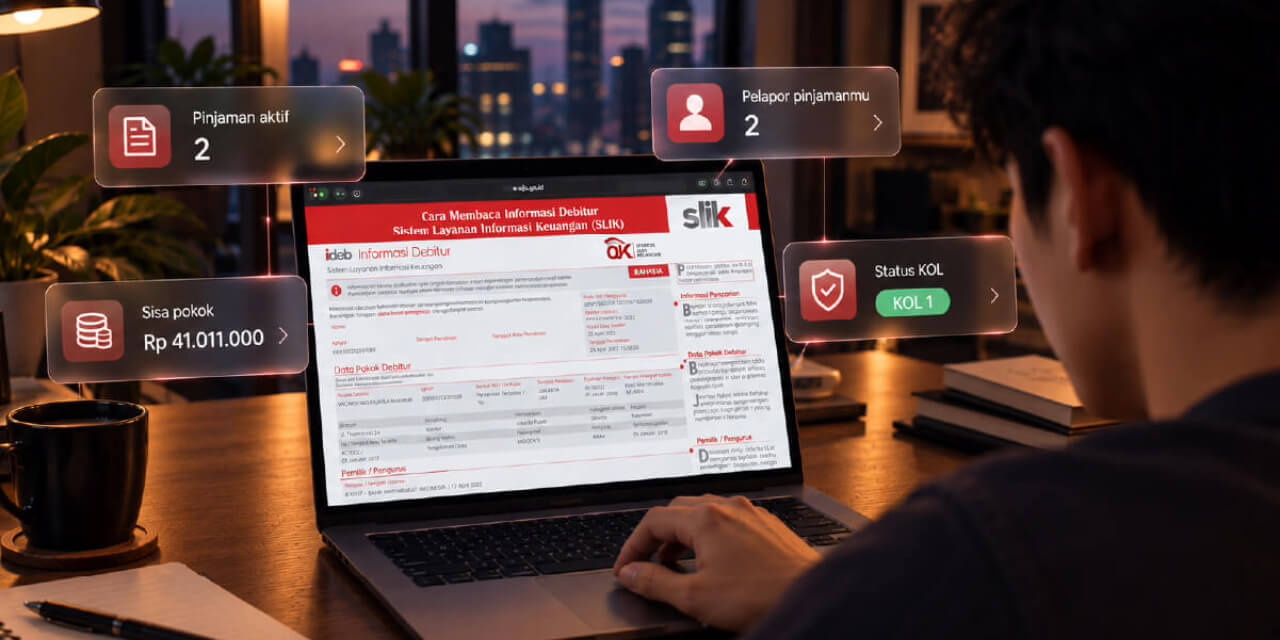
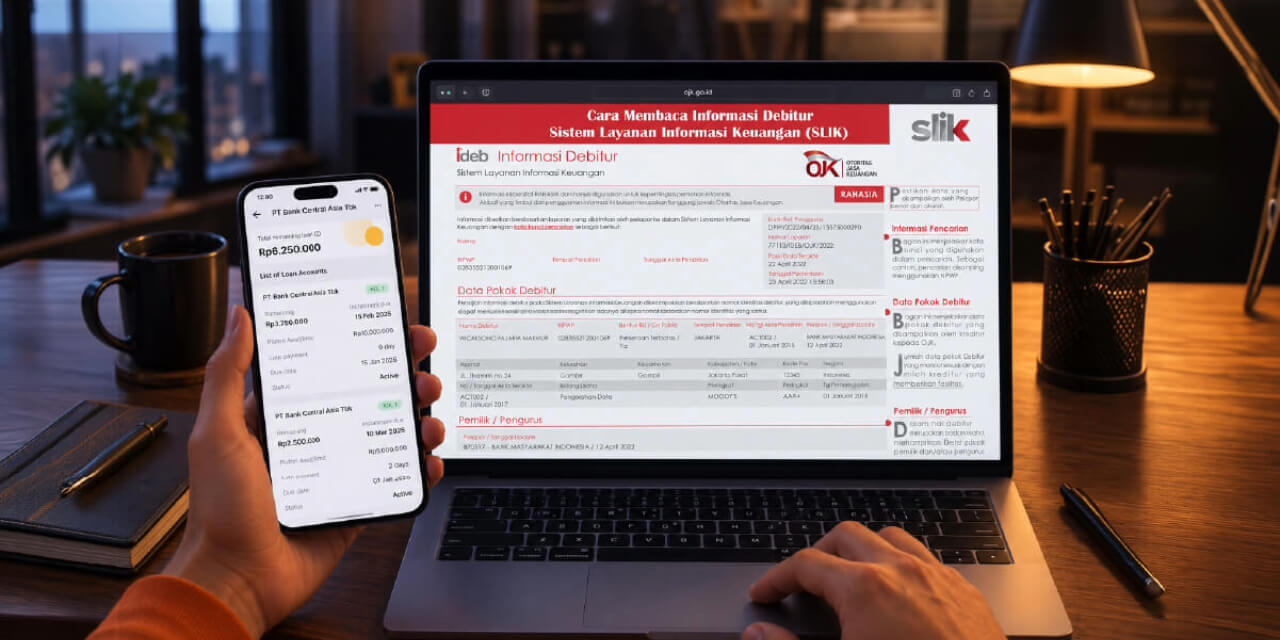
Through the Rapor Kredit feature, you can check your credit history and monitor your loan quality status transparently, based on SLIK OJK data, directly from a single app.
With a solid understanding of your financial reputation, you can comfortably leverage various transparent financing options with fair, low-interest rates, ranging from Dana Cepat when you need fast-disbursing loan solutions for urgent needs, to Dana Siaga as a flexible emergency fund safety net that is ready whenever you need it.