




The internship phase often brings a whirlwind of emotions. There is a sense of pride as you finally step into the "real working world," yet at the same time, a trace of anxiety creeps in whenever you check your bank balance at the end of the month.
As an intern, everyone’s background and financial situation are inherently different. Some are still fully supported by their parents for daily essentials, allowing them to channel their entire internship stipend into future savings. On the flip side, others have chosen, or are required, to learn independence by covering their own living expenses, ranging from boarding house rent and daily meals to transportation costs.
No matter what your financial situation looks like right now, your internship is a golden window of opportunity to build healthy financial habits. You do not need to wait until you earn a massive salary to start learning how to manage your money. Let's break down the practical ways to do it!
Understanding the Financial Profiles of an Intern: Which One Are You?
Before setting up a budget, it is crucial to recognize your current situation and financial capacity. Generally, interns fall into one of two categories:
1. The "parentally supported" category
If your basic needs like housing or daily meals are still covered by your parents, it means your internship stipend is a valuable asset to accelerate your future goals.
- Primary Focus: Building consistency in saving and investing in yourself.
- Ideal Allocation: 50% Savings/Initial Emergency Fund, 30% Personal Development (courses, certifications, books), 20% Self-Reward & Lifestyle.
2. The "fully independent" category
If you are entirely self-funding your daily expenses using your internship stipend (and allowance, if any), the ultimate keys are setting a clear scale of priorities and building financial resilience.
- Primary Focus: Covering essential needs wisely and staying out of debt.
- Ideal Allocation (Adjusted 50/30/20 Rule): 50% - 60% Essential Needs (rent, food, transport, data plan, etc.), 20% - 30% Emergency Fund & Savings, 10% - 20% Self-Reward (still essential to keep you from burning out early!).
Why an Emergency Fund Matters, Even for an Intern
The thought might cross your mind, "My intern stipend is so small, why bother building an emergency fund now?" Building an emergency fund during an internship is not just about the numbers in your bank account; it is about establishing a safety net and achieving peace of mind.
The new professional world is full of unpredictable shifts. You might suddenly need a larger data package for remote assignments, face higher transit costs due to overtime, or deal with a laptop that unexpectedly breaks down in the middle of a vital project. Having an emergency fund saves you from panicking or scrambling for a loan when the unexpected occurs.
More importantly, saving money when resources are limited is far more challenging than doing so when funds are abundant. If you can train this "discipline muscle" now, you will be remarkably more prepared for the future.
The Financial Bridge to a Professional Career
There is a powerful link between the emergency fund you build during your internship and your future after graduation. This fund will serve as your "capital for freedom and resilience" once you officially become a fresh graduate:
- Breathing Room During the Job Hunt: After graduation, not everyone lands a job within the first month. The recruitment process, from psychological tests to interviews, can easily take 3 to 6 months. This emergency fund is what will cover your living costs (meals, internet data for online interviews, and commuting expenses) while you lack a steady income.
- Preventing "Desperation Hiring" (Settling for Just Any Job): When you have zero savings, panic sets in, forcing you to accept the very first job offer that comes along, even if the pay is below standard or the workplace environment is toxic. An emergency fund buys you the extra time needed to choose a career path that truly aligns with your highest potential.
- Initial Capital for Independent Living: Starting a new job requires upfront costs. This includes paying rent for a place closer to the office, buying professional work attire, or simply surviving the first month before your very first paycheck drops.
Next Steps: Preparation After Graduation and Entering the Workforce
An internship is merely the opening chapter. Once this phase wraps up, you will transition into the next, equally challenging chapter: graduating from college, hunting for your dream job, and becoming a fresh graduate.
A full-time career path undoubtedly introduces challenges and expectations quite distinct from your internship days:
- Growing Financial Responsibilities: Social expenses might shift, and daily requirements can expand along with your new professional role.
- A Job Hunt That Takes Time: It can occasionally take several months before you secure the right job offer. This is where the savings you accumulated during your internship will step in to salvage both your psychological and financial stability.
- Managing Your First Real Salary: Once you receive your paycheck as a fresh graduate, you will handle a larger amount of money alongside responsibilities that demand more mature management.
Curious about the best financial transition strategy from an intern to a full-time employee? You can read the complete guide in this article How to Manage Money as a Fresh Graduate to prime your finances from day one on the job.
Practical Ways to Manage Money and Save Your Intern Stipend Using the Jago/Jago Syariah Pockets
Managing money manually often drains your time and energy. However, budgeting and organizing your finances has now become much easier and more practical using the Jago/Jago Syariah Pockets.
With Pockets, you can separate your money into its respective slots based on its purpose, ensuring funds are distributed according to your allocations without the hassle of opening multiple bank accounts.
Here is the practical strategy:
Step 1: Separate incoming funds into Spending Pockets
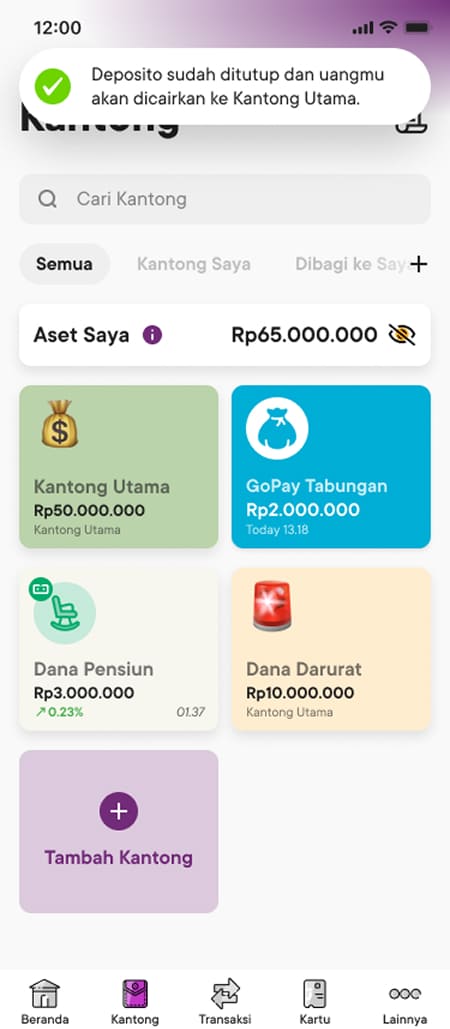
The moment your internship stipend or allowance arrives, avoid leaving all the funds piled up in one place. Create a few Spending Pockets for your recurring expenses:
- Daily Needs Pocket: For meals and transportation. You can link this pocket directly to your Jago debit card or Jago QRIS when making transactions or payments.
- Bills Pocket: Exclusively for boarding house rent, electricity, or data packages.
Step 2: Secure your savings in Saving Pockets
Next, set aside your savings allocation right away before it gets spent on other things. Create Saving Pockets:
- Emergency Fund Pocket: Move your emergency fund portion here so it stays safe and does not accidentally get used for daily shopping.
- Wishlist Pocket: A dedicated space to gather funds for dream items, upgrading gadgets to support your work, or treating yourself once the internship ends.
Step 3: Activate automation features
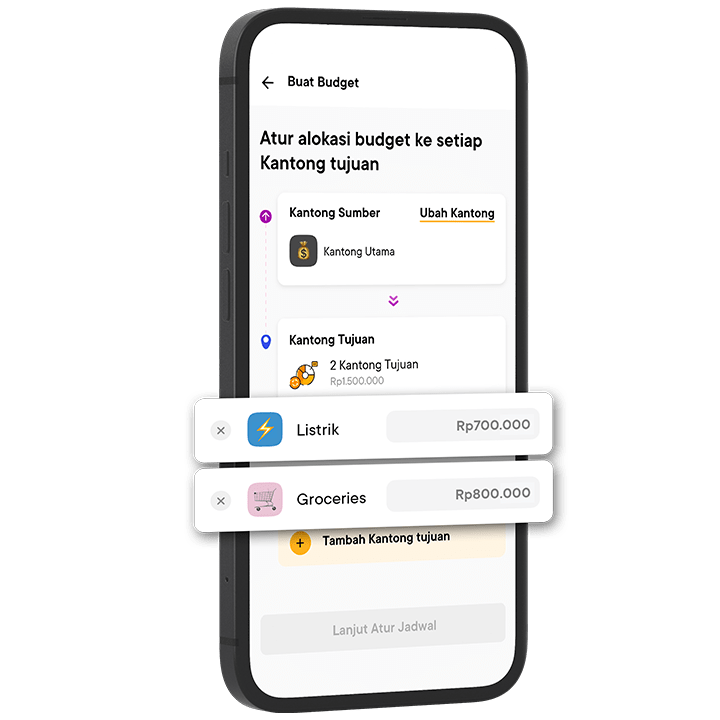
To keep your budgeting and saving routine consistent, take advantage of the Auto-Budgeting feature in the application. Every time payday arrives, the system will automatically move a set amount of funds into your selected Pockets.
Jago Tips: Personalize each of your Jago/Jago Syariah Pockets with unique names and photos, such as "Graduation Fund" or "Self-Appreciation Pocket". This simple trick provides an emotional boost whenever you set money aside.
Internships Are Temporary, But This Money Habit Is For Life
The phase of being an intern naturally has an expiration date. In a matter of months, you will complete these tasks, say goodbye to your coworkers, and step into a brand-new phase of life. While the internship assignments may end, the excellent money management habits you build today will stick with you and protect you for a lifetime.
Every small decision to resist impulse buying, every instance you consistently top up your Emergency Fund Pocket, and every step toward independence you take right now forms a tangible foundation. Juggling this process while wrapping up your final thesis and adjusting to a new work rhythm is admittedly a tough challenge.
However, the financial maturity you nurture today will make your stride as a future fresh graduate so much lighter, calmer, and more focused. Take it one step at a time. You have made an incredible start, and this exceptional habit is exactly what will look after you well into the future!
FAQ About Intern Finances
1. How do I manage my intern money if my income is unpredictable?
Focus on percentages rather than exact amounts. Apply a percentage allocation principle (e.g., 50% needs, 30% savings, 20% wants). Every time you receive a stipend or an incentive, immediately divide it into your Jago Pockets based on those percentages.
2. What is the ideal emergency fund amount for an intern?
For an intern's scale, aim for an emergency fund equivalent to 1 to 3 times your monthly expenses. If your basic needs are still supported by your parents, hitting a target of 1 month's worth of expenses is already an excellent start.
3. Should an intern start investing?
Prioritize your emergency fund and invest in yourself first (such as skill development, training, or certifications). Once your basic emergency fund is secured, you can begin exploring low-risk investments like money market mutual funds through the integration of Jago/Jago Syariah with investment platforms like Bibit.
4. What is the difference between Jago/Jago Syariah Spending and Saving Pockets?
Spending Pockets are designed for daily transactional needs and can be linked directly to a debit card or digital payment methods. Meanwhile, Saving Pockets are focused on storing funds securely so they are not easily spent, and they can be customized with targets to help you track your saving progress.