



In Islam, giving sadaqah is a form of good deed that is highly recommended. You can continue reading this article to find out more details about sadaqah in Islam and how to give it in a trustworthy manner.
Sadaqah in Islam
The spirit of giving and sharing to lighten the burden of those who need our helping hand by means of sadaqah is a form of noble deed.
1. Recommendation for sadaqah in Islam
In Surah Al-Lail in the Qur'an, it is recommened for Muslims to carry out charitable deeds through sadaqah as follows:
“As for the one who is charitable, mindful of Allah, and firmly believes in the finest reward, We will facilitate for them the Way of Ease.” (QS. Al Lail, 92 : 5-7) - reference: Republika.
2. Forms of sadaqah in Islam
Maybe you think that sadaqah must always be in the form of money. It is important to know that sadaqah is not limited to just money, but can also take the form of good deeds, clothing, food, time, energy and various other types of kindness (reference: Republika).
For example, a friend just experienced a house fire. If you help renovate their house on the weekends, this is also a form of sadaqah as you are giving your time and energy to help a friend in need.
3. Who is sadaqah given to, in what order?
According to Islamic teachings, in giving sadaqah there is an order to follow. The priority of sadaqah starts with your own family first. Furthermore, if you still have more, you can give sadaqah to your relatives. If there is still even more that can be given as sadaqah, then it can be done for other people (reference: Republika).
4. There are fajr sadaqah and friday sadaqah
Many people choose to give sadaqah at fajr and on Fridays. When is the best time to do fajr sadaqah and Friday sadaqah? What can you do to prioritize giving sadaqah regularly and consistently?
Read the article about fajr sadaqah and friday sadaqah here.
The Importance of Sadaqah in Islam
There are many good things you can get by giving sadaqah. This is why sadaqah is highly recommended for Muslims. What are the virtues of sadaqah?
As reported by Republika, there are a number of virtues of giving sadaqah. Allah's grace will descend on those who do it. Divine wrath can also be quenched by giving sadaqah. Apart from that, another virtue of sadaqah is refusing to die in bad circumstances. No less important is that with sadaqah, diseases can be cured. And, through sadaqah, people will not have their wealth reduced. Additional sustenance can be obtained and blessings in life can be enjoyed.
A Good, Easy and Trustworthy Way to Give Sadaqah with Jago Amal to Share Kindness
Are you ready to share kindness by doing charity to help others in need through sadaqah? There are many ways to give sadaqah, some can even be done practically from anywhere.
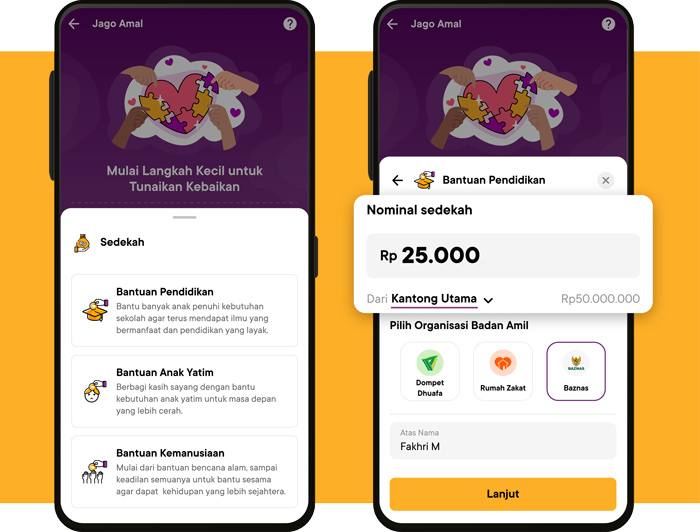
Giving sadaqah, in the form of money, with amanah is easily available through Jago Amal. Jago Amal is a feature that you can enjoy through the Jago application. By having a Jago Syariah account, you can share kindness through fajr sadaqah, Friday sadaqah and sadaqah whenever you want.
At Jago Amal, you can choose between three amil organizations that collaborate with Jago Syariah to distribute your sadaqah, namely Dompet Dhuafa, Rumah Zakat and Baznas. Apart from that, you can also see transparency reports from each amil institution via the Jago Syariah website.
Alhamdulillah, your help in the form of sadaqah will change other people's lives and you have also shared your kindness with amanah.
Berikut adalah terjemahan dari Pertanyaan yang Sering Diajukan Seputar Sedekah (FAQ) tersebut:
Frequently Asked Questions About Sadaqah
1. What is the correct and most meritorious way to give Sadaqah according to Islam?
The correct and most meritorious way to give charity is based on three main principles:
- Sincerity: Sadaqah must be performed solely to seek the pleasure of Allah SWT, without expecting praise or reward from humans.
- Quality of Wealth Given: Sadaqah should be given from good wealth and that which you cherish.
- Priority of Recipient and Time: The most meritorious charity is that given to family first, then close needy relatives, followed by others such as the poor, orphans, or charity given secretly (to safeguard sincerity), as well as charity given both during times of ease and hardship.
2. How should sadaqah expenses be managed in a Muslim's personal finance?
Sadaqah expenses should ideally be managed as follows:
- Budget Separation: Sadaqah should be separated and allocated immediately after receiving income. In the Jago application, you can create a separate Pocket for sadaqah.
- Priority: Although sadaqah is voluntary, making it a priority and setting it aside at the beginning is more recommended than giving it from the remaining money at the end of the month.
3. Does sadaqah always have to be in the form of money or wealth?
No. sadaqah has a broad meaning (non-material charity) because every good deed is considered sadaqah. Examples of non-material sadaqah include:
-
Smiling at fellow Muslims.
-
Removing obstacles from the road.
-
Doing Dhikr and Tasbih.
-
Giving beneficial advice or knowledge.